
Posts Tagged ‘internet’

civil liberties, internet freedom and acta

Thursday, January 26th, 2012

-

-

Tim Wu, best known for coining the phrase network neutrality in his paper “Network Neutrality, Broadband Discrimination”, explained the aim of his book -The Master Switch / Rise and Fall of Information Empires- in an interview:

“It has been the aim of this book to show that our information industries –the defining business ventures of our time- have from their inception been subject to the same cycle of rise and fall, imperial consolidation and dispersion, and that the time has come when we must pay attention.”  (http://www.erhanekici.com/blog/2010/11/22/bilgi-imparatorluklarinin-yukselisi-ve-dususu/)

and he was right, internet freedom, civil liberties and network neutrality are at stake and the time has come when we must pay attention.

Wikipedia -the largest and most popular general reference work on the Internet- has taken its english edition site offline as part of protests against proposed anti-piracy laws -SOPA/ PIPA- in the United States.  Some other popular web sites -Google, Boing Boing etc- joined the party as well.  While there was remarkable attention to online anti-piracy bills,the most important one, ACTA – the Anti-Counterfeiting Trade Agreement- hasn’t been so lucky to catch media attention yet poses a tremendous threat to internet and civil liberties.

Last week, a short video made by Anonymous group about ACTA posted on youtube and it explains “what is ACTA” from an civil liberties view:

in 2009, I had posted an entry on my blog about ACTA:

Knowledge Economy, Copyright and IP in Digital Age?
http://www.erhanekici.com/blog/2009/12/01/knowledge-economy-copyright-and-ip-in-digital-age/

-

akif beki’nin hezeyanları

Tuesday, May 17th, 2011

Neresinden tutarsanız tutun elinizde kalacak yazılar vardır. Radikal yazarı Akif Beki’nin bugünkü yazısı da (başlığı “Tam bağımsız internet’ palavrası”) maalesef aynen öyle. (başka yazıları sanki öyle değil mi diyenlere de sözüm olmaz)

“Özgürlük”  kavramının kendisinden yeteri kadar nasiplenmemiş, olayları bir gazeteci objektifliği ile değil, bir “fanatik şuursuzluğu” ile ele alan birinin kaleminden çıkan satırları çok da kaale almamak lazım diyebiliriz ama dememek, cevabını vermek gerekir.

Internetine Dokunma

Beki'nin "Sanal Anarşistler" kitlesi

Beki şöyle diyor: “İnternet yoluyla suç işlemek serbest, her türlü müstekrehliğe maruz kalmak da mecburi olsun demeye getiriyorlar.” (müstekreh – iğrenç. E.E) Bunu diyerek de sansür, devlet kontrolü, siyasi otoriteye tabilik gibi keyfi bir çok uygulamaya giden yolu açacak “filtreleme” uygulamasını “özgürlük / güvenlik” denkleminin içine koyarken olaya yaşadığı ülke ve devletin şimdiye kadar ki uygulamalarını görmüş ve bu adımın nasıl tehlikeli bir kontrol / kısıtlama mekanizmasına dönüşebileceğinden endişe eden, bu endişelerini de haklı gerekçelere dayandıran, meydanlara inmiş onbinlerce ve onlara uzaktan da olsa destek vermiş yüzbinlerce insanı basitçe “suç özgürlüğü” taraftarı ilan ediveriyor. Uygulamaya tepki gösterenleri “işi” bilmediğinden dem vurup, protesto edenleri temelsizce “sanal anarşistler” olmakla suçluyor.
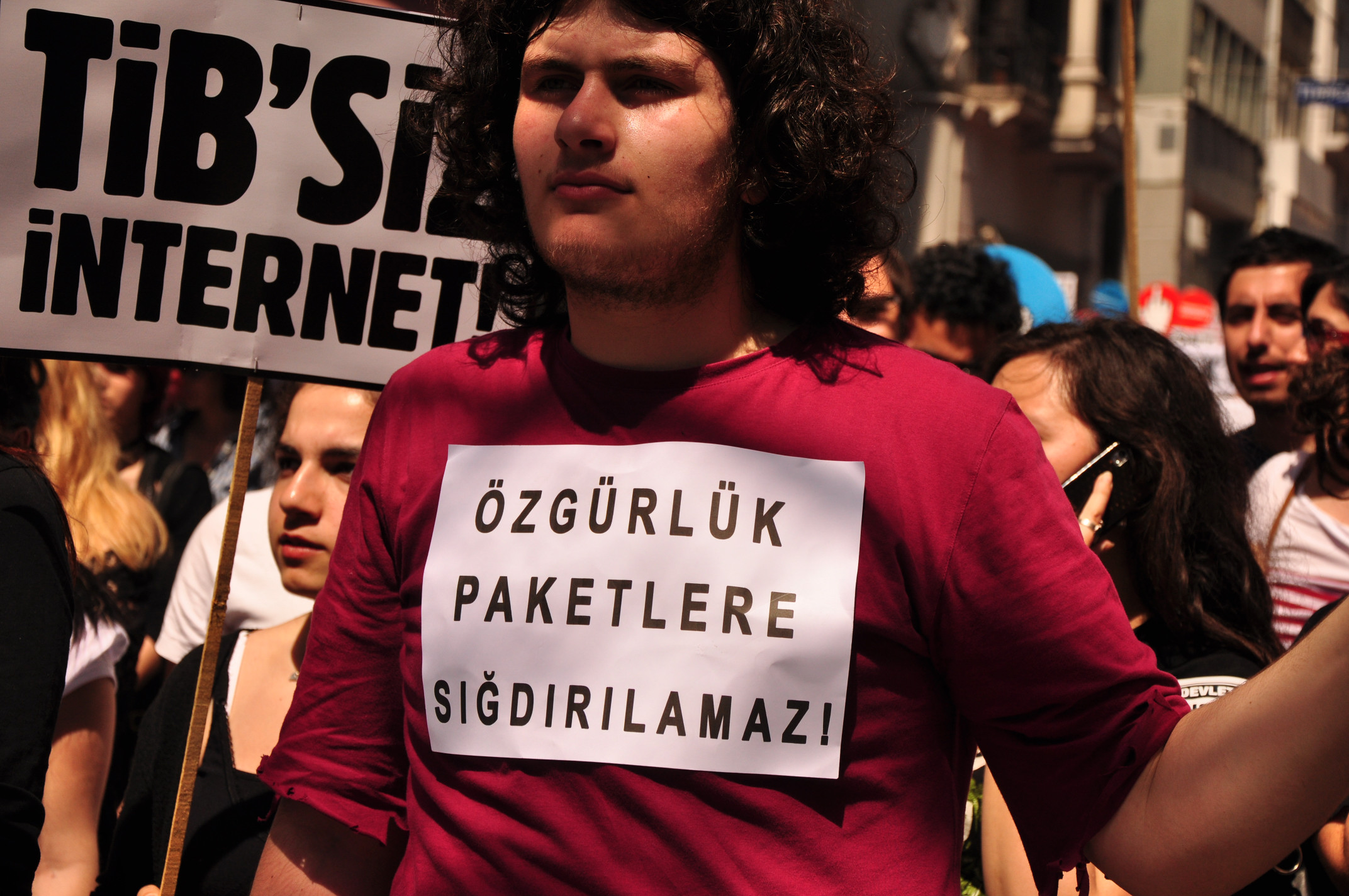
internetime dokunma

20-25 bin kişi taksimdeydi

Oturup düşünmek yerine, olayları siyah beyaz denklemine indirgemek, bir fikri / görüşü savunurken karşı tarafı “suç taraftarlığı” ile suçlamak, bu teknoloji ve yazılım çağında “internette işlenen suçları” engellemenin on yüz bin tane methodu varken, “merkezi filtreleme” ile bunu yapan “tepeden kontrol” yanlısı bir uygulamayı canhıraş savunmak, bu savunmayı yaparken de “seçimler yaklaşıyor ya” diyerek partilerüstü olan demokratik bir tepki yürüyüşünü imalı imalı çamurlamak Akif Beki’ye yakışır mı demek isterdim ama kendisi bizleri yine şaşırtmadı maalesef.

Sevgili Akif Beki; insanların neyi görüp neyi görmeyeceği kendilerinin karar vereceği bir şeydir. Devlet sizin adınıza nereye girip nereye giremeyeceğize karar verirse bunun adı “güvenli internet” olmaz, olsa olsa “intranet” olur. Ama şimdi “siz intranet’te ney”  dersiniz? Özgürlüğü savunmak tüm iktidarlar tarafından hep suçla özdeşleştirilir, manipülasyonun en kolay yoludur. Bu halk neyin suç neyin özgürlük olduğunu emin olun sizden çok daha iyi anlayacaktır.

Sevgili Akif Beki; Marguerite Yourcenar “Hayatın bize rüya kadar saçma gelmemesinin nedeni alışkanlıktır” demiş ya,  sakın bu filtreleme / sansür uygulamalarının size rüya kadar saçma gelmemesinin (çok doğal gelmesinin) nedeni de alışık olduğunuz biat kültürü olmasın?

Shubert’in “Bitmemiş Senfoni” si fonda çalarken “Olmamış bir yazar” ın yazısına cevap vermek ayrıca can sıkıcı.

-

Gülümse, gülümse..

Knowledge Economy, Copyright and IP in Digital Age?

Tuesday, December 1st, 2009

When a law or policy draft process related to the internet or communication takes place in public, the question “What about the common/individual rights” comes to mind. But, this time, the process is not open to public. It is a little bit secret for some reason or other. What we are talking about is Anti-Counterfeiting Trade Agreement(ACTA).

What is it? The Anti-Counterfeiting Trade Agreement (ACTA) is a proposed plurilateral trade agreement for establishing international standards on intellectual property rights enforcement.(Wikipedia – ACTA)

copyrightAt the end of 2007, the United States, the European Community, Switzerland, and Japan announced the launch of ACTA. Since mid-2008, the Australia, Canada, the European Union, Jordan, Mexico, Morocco, New Zealand, the Republic of Korea, Singapore and the United Arab Emirates and maybe some other countries have been negotiating that trade treaty (ACTA) in a secret manner.

ACTA signatory countries say that they need improved international standards for actions against the increase in global trade of counterfeit goods and pirated copyright protected works. Secrecy in the process leads to us thinking of that they knew people would speak out against ACTA. Seemingly, the goal of ACTA treaty is to adapt copyright to the digital age. That doesn’t mean that there aren’t important details like anti-file sharing and net-filtering policies. There are.

There have been a lot of criticism since some leaked draft documents are available on the internet. Main concerns are secrecy of negotiations, legal scope, privacy and threat to free software.

“Although the proposed treaty’s title might suggest that the agreement deals only with counterfeit physical goods (such as medicines), what little information has been made available publicly by negotiating governments about the content of the treaty makes it clear that it will have a far broader scope, and in particular, will deal with new tools targeting ‘Internet distribution and information technology’ “Free Software Foundation(FSF) says in its “Speak out against ACTA” campaign.

La Quadrature du Net, an advocacy group that promotes the rights and freedoms of citizens on the Internet, criticizes ACTA from democratic process and internet neutrality perspectives:

“At a time when important debates are taking place on the need to adapt copyright to the digital age, this treaty would bypass democratic processes in order to enforce a fundamentally irrelevant regulatory regime. It would profoundly alter the very nature of the Internet as we know it by putting an end to Net neutrality“

Last week, Eddan Katz and Gwen Hinze from the Electronic Frontier Foundation, is the leading civil liberties group defending rights in the digital world, published an essay on ACTA in the Yale Law Journal of International Law Online. Their approach to ACTA is not just focused on civil liberties but democratic accountability, transparency, impact on knowledge economy, internet and innovation. From the essay :

“…IP enforcement isolated from innovation policy ignores the legal flexibility that enables information technology to emerge, obstructs access to knowledge, and threatens citizens’ civil liberties.”

“The confidentiality rationale fails most significantly from a public policy perspective. Transparency is necessary for balanced policymaking that serves the needs of all stakeholders in the knowledge economy.”

“…It will also restrict the global flow of information by regulating, and potentially criminalizing, the next generation of innovative network technologies…

I am not a citizen of ACTA signatory countries but I know that this kind of agreement will be a starting point for future [inter]national agreements/regulations. If you are a citizen of signatory countries, you can “speak out against ACTA” before 2010.

http://www.fsf.org/campaigns/acta/

Have a nice day,